
For most of the last decade, retail commentary has followed a familiar script.
When department stores lose share and off-price gains ground, the explanation usually centers on pressure. Consumers feel squeezed. Budgets tighten. Shoppers adjust expectations. The conclusion tends to be simple: people are spending less and looking for cheaper alternatives.
Q3 data points to a different conclusion.
Spending remains present.
What’s changing is where it flows.
According to GlobalData, off-price retail grew 8.5% year-over-year in Q3, while department store sales declined 1.4%. Beneath those headline numbers sits a more revealing data point: approximately $179 million in consumer spend moved directly from department stores into off-price channels.
This movement reflects clarity. Shoppers are making deliberate choices about where value feels real, consistent, and worth repeating.
A reallocation driven by confidence
Reallocations signal intention. They suggest that shoppers know what they want and where they prefer to find it.
Across categories like beauty, wellness, supplements, pet, and gifting, shoppers increasingly gravitate toward off-price environments as places of discovery. These aisles deliver familiarity alongside rotation, predictability alongside surprise. The experience feels active rather than transactional.
That matters because it reframes off-price’s role in the shopping journey. Instead of serving as a secondary stop, it increasingly functions as a primary destination, especially for everyday wins and giftable finds.
This same behavioral pattern shows up clearly in social-first brands. Digital momentum often precedes in-store demand, and shoppers carry recognition with them when they encounter those brands in physical retail. We explored this dynamic in depth through TikTok-driven brands, including how Goli’s digital saturation translated into off-price performance once shoppers encountered it in trusted retail environments.
The connective tissue across these moments is confidence. Shoppers trust their judgment, trust the brands, and trust the aisle.
Value literacy reshapes how shoppers think
Today’s shopper operates with a refined understanding of value.
Brand credibility no longer belongs to a single retail format. Access is abundant, information travels quickly, and discovery happens everywhere, from TikTok to Amazon to store aisles. As a result, shoppers evaluate value holistically.
Off-price increasingly represents a convergence of signals:
Brands shoppers already recognize and understand
Pricing that reinforces smart decision-making
Environments designed around discovery rather than repetition
This combination changes the emotional calculus of shopping. Finding a product at off-price feels rewarding. It confirms awareness, timing, and judgment.
As this mindset takes hold, off-price becomes an intuitive place to shop for both essentials and gifts. The aisle supports confidence, especially when alongside well-known brands.
Trust migrates from the brand to the environment
For decades, department stores served as the default venue for retail credibility. Their assortments, layouts, and positioning conveyed legitimacy without explanation. Shoppers assumed quality based on location alone.
That dynamic has shifted.
Off-price environments have steadily earned trust through consistency. Shoppers repeatedly encounter recognizable brands, presented cleanly, rotated often, and priced in ways that feel aligned with expectations. Over time, the aisle itself becomes a signal of quality.
This is where shelf adjacency compounds value. When trusted brands consistently appear together, credibility becomes collective rather than individual. Each product benefits from the reputation of its neighbors, reinforcing confidence at scale.
Once trust is established, experience and price align. Discovery drives faster decisions, rotation maintains momentum, and value is immediately clear.
The department store challenge takes shape
Department stores face a challenge rooted in differentiation rather than demand.
Shoppers now encounter the same brands across multiple environments. When prices trend higher and assortments feel static, comparisons become straightforward. The emotional payoff of the experience carries more weight than the presence of the brand itself.
Off-price has leaned into dynamics that once defined department stores:
Frequent assortment refreshes
Discovery-driven layouts
A sense of momentum that rewards exploration
These elements create engagement and encourage browsing. They transform shopping into an experience rather than a task.
Habits form, then compound
The durability of off-price momentum lies in habit formation.
Shoppers who repeatedly find great gifts, everyday essentials, and familiar brands in off-price environments begin to incorporate those aisles into their regular routines. Over time, these routines become default pathways rather than alternatives. This is exactly what is happening.
This behavioral reinforcement gives weight to Q3 data. Growth reflects preference, and preference compounds. Each positive experience increases the likelihood of return.
As these habits scale, off-price’s role in the broader retail ecosystem evolves. It becomes a steady contributor to household shopping patterns rather than a situational choice.
Off-price as a credibility accelerator for brands
For brands, this shift creates a powerful opportunity.
Off-price now functions as a credibility accelerator when approached with intention. Placement alongside trusted peers reinforces legitimacy. Visibility at scale introduces brands to new audiences without relying on discounting as a signal.
Brands that perform well in off-price tend to share common traits. They approach the channel strategically, viewing it as a brand environment rather than an outlet. They select SKUs carefully, ensuring clarity and relevance within the aisle. Packaging communicates value quickly and confidently.
This approach transforms off-price from a transactional channel into a strategic one. It supports discovery, reinforces trust, and contributes to long-term brand equity.
The role of packaging and value clarity
Packaging plays a central role in this ecosystem.
In off-price environments, shoppers move quickly. Decisions often happen within seconds. With that said, value must be legible without explanation. Brands that succeed communicate benefits, use cases, and differentiation clearly at shelf level.
As off-price continues to serve as a discovery channel, packaging becomes a primary interface between brand and shopper. Value engineering, format choices, and visual hierarchy all contribute to performance.
Strategic implications for 2026 planning
Heading into 2026, off-price represents a meaningful strategic consideration for brands across categories.
Approached thoughtfully, it offers:
Discovery at scale
Cashflow without promotional conditioning
Visibility alongside brands shoppers already trust
Reinforcement of legitimacy through adjacency
The brands seeing sustained success treat off-price as part of a broader ecosystem. They integrate it into channel strategy rather than isolating it as a last step. They plan assortments, packaging, and timing with intention.
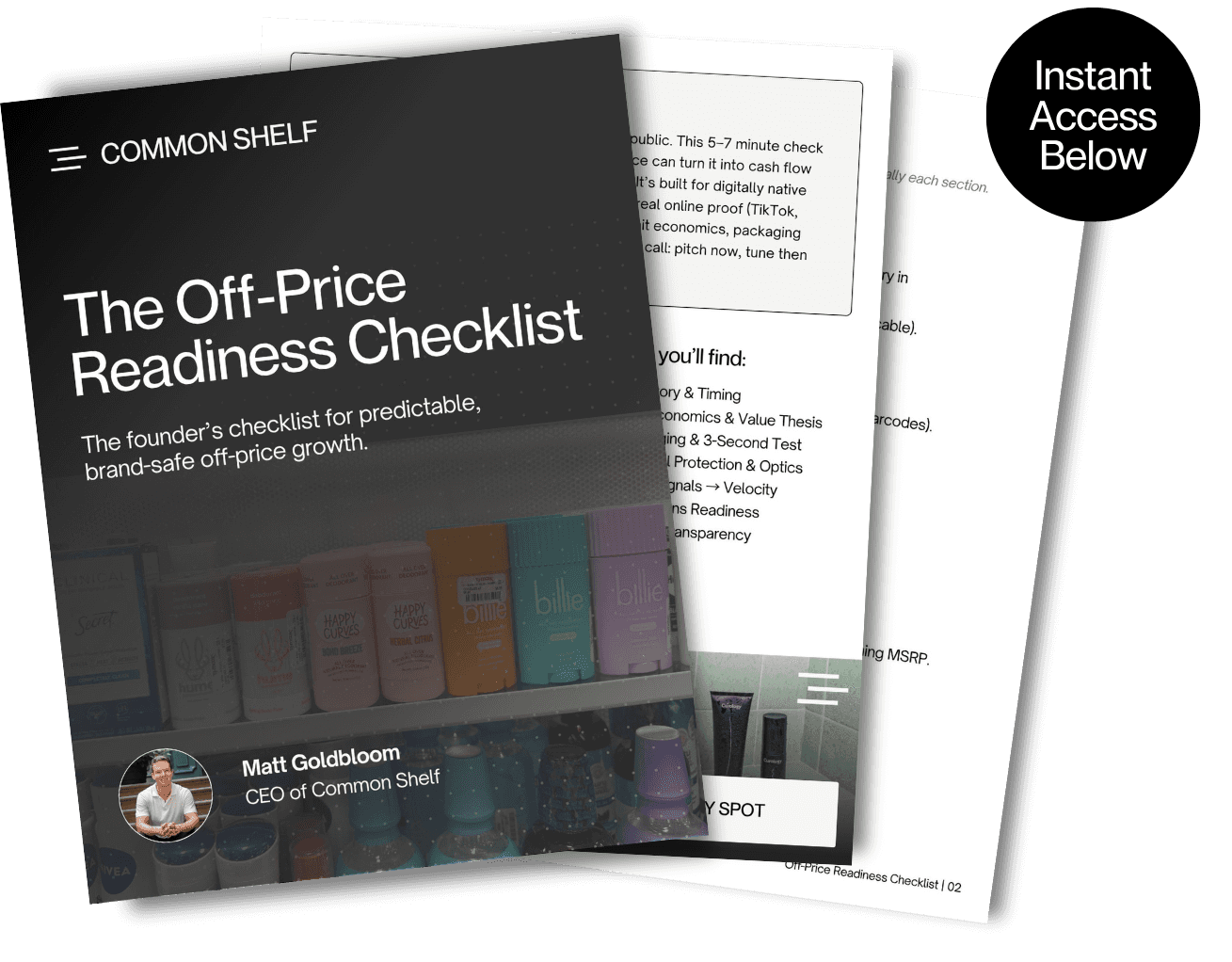
This framework underpins how we evaluate readiness and execution with founders and operators.
Because trust increasingly precedes visibility, shaping where and how brands appear.
What the data ultimately shows
Q3 data highlights growth and captures a moment of consumer behavior clarity.
Shoppers are actively reshaping where value lives. They’re choosing environments that reward awareness, deliver discovery, and reinforce confidence. Off-price aligns with these expectations in ways that resonate across categories.
As trust migrates, spend follows. As habits form, momentum compounds.
For department stores, this creates pressure to redefine differentiation and experience. And for brands, it opens a channel that blends discovery, validation, and scale.
The takeaway
Off-price growth reflects trust earned through consistent experience.
As shoppers redefine where credibility lives, their spending patterns follow that confidence. This shift carries structural implications for retail and strategic implications for brands.
Heading into 2025, off-price stands as one of the most influential environments shaping how consumers discover, evaluate, and adopt brands- quietly, consistently, and at scale.

Latest in Off-Price
