
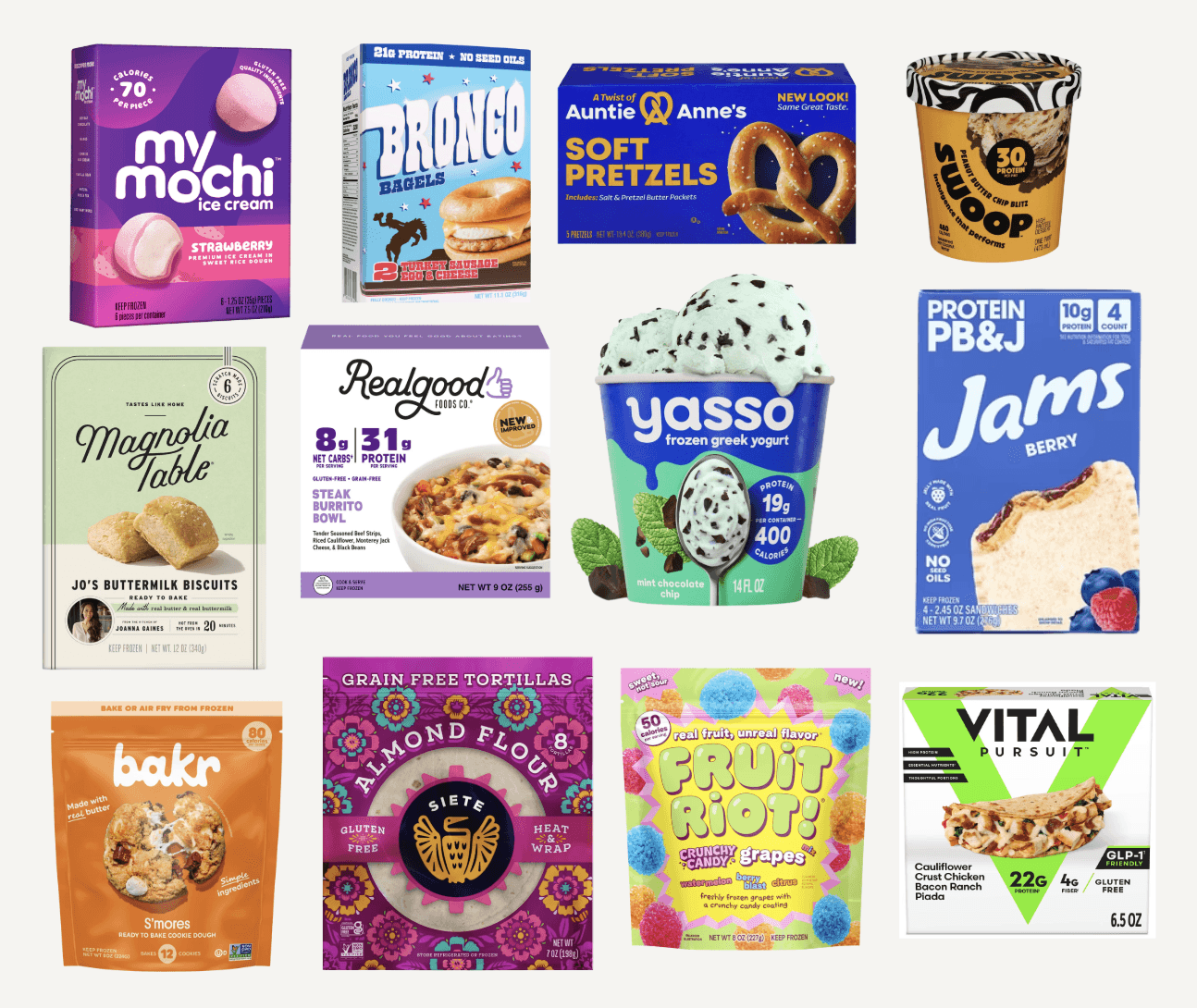
Everyone thinks off-price food is a side quest.
The data says it’s a category strategy hiding in plain sight.
Because the consumer in 2026 are shopping smarter:
Still craving flavor + novelty
Still snacking (often instead of meals)
Still relying on frozen as “insurance” for busy weeks
But less tolerant of inflated prices and value theatre
You can see the tension in the market:
Circana expects U.S. food & beverage dollar growth ~3.2% (with low volume growth)—meaning a lot of “growth” is still price/mix, not people buying more stuff.
And unit demand has been soft in key periods (Circana noted unit demand declined ~1% over a five-week December window vs. the prior year).
Big snack brands are responding with pricing actions, PepsiCo even signaled price cuts on major snack lines after years of sticker shock.
That’s the setup.
And it’s exactly why off-price can win Food & Bev in 2026—if you run it like a modern category, vs a clearance table.
The thesis: Snacking is still growing, but it’s getting “pickier”
Snacking has splintered.
Two things are simultaneously true:
Core salty snacks have been growing (SNAC/Circana cited $31.1B in salty snack dollar sales with +6.9% growth in the 52 weeks ending in 2023).
The consumer is getting more selective, trading between:
True indulgence (but only when it feels “worth it”)
Better-for-you / functional (protein, fiber, gut-health cues)
Novelty + global flavor (TikTok-driven trial behavior)
NIQ’s Fancy Food Show trend recap basically screams this: protein-forward products, premium convenience, global inspiration are driving what’s new.
So here’s the contrarian point:
Off-price is not competing with grocery on “need.” It’s competing with grocery on “surprise + permission.”
Permission = “this looks premium but doesn’t cost premium.”
That’s the off-price psychological edge.
The frozen aisle is quietly becoming the “value innovation” aisle
Frozen has turned into the category that solves the modern household equation:
“I want to eat better, spend less, and think less.”
The frozen innovation signals are loud:
Conagra’s Frozen report frames the U.S. frozen market around $93.5B.
In that same ecosystem, frozen is winning on protein + convenience:
The frozen aisle is a leading space for high-protein food (~$12B annually) and protein-related interest is exploding (hundreds of millions of searches).
Clean label / minimally processed frozen items are cited as nearly $28B in sales, with clean label growth faster among Gen Z and Millennials.
Large-format / multi-serve frozen is now a huge share of the freezer: $18.6B in sales and ~41% of frozen aisle dollars (per the report’s cited Circana cuts).
Translation:
Frozen has become:
the macro-friendly aisle
the family economics aisle
the I don’t have time aisle
the air fryer culture aisle (snackable apps, restaurant mimicry)
So… it makes me think. What would I do as Head of Food & Bev at TJ Maxx?
First: I’d pilot “Frozen Discovery” the TJX way (select stores, tight set, high turns)
Let’s be real: TJ Maxx isn’t built like Kroger.
So the move isn’t “roll out frozen everywhere.”
The move is:
Pilot a frozen discovery set in the right boxes
Select HomeGoods / Homesense style stores already leaning into “expanded gourmet food departments.”
Use a tight freezer footprint:
air-fryer apps
high-protein bowls
family-format mains
better-for-you comfort (protein pizza, portioned meals)
Then merchandise it like a drop:
“NEW IN FREEZER”
“AIR FRYER FAVORITES”
“PROTEIN MADE EASY”
Why this works now:
Frozen is positioned as nutritious + convenient + cost-effective, and industry bodies are actively reinforcing that frozen can support healthier eating patterns.
And consumers are responding, protein-forward frozen is a major dollar pool and accelerating.

Latest in Off-Price
