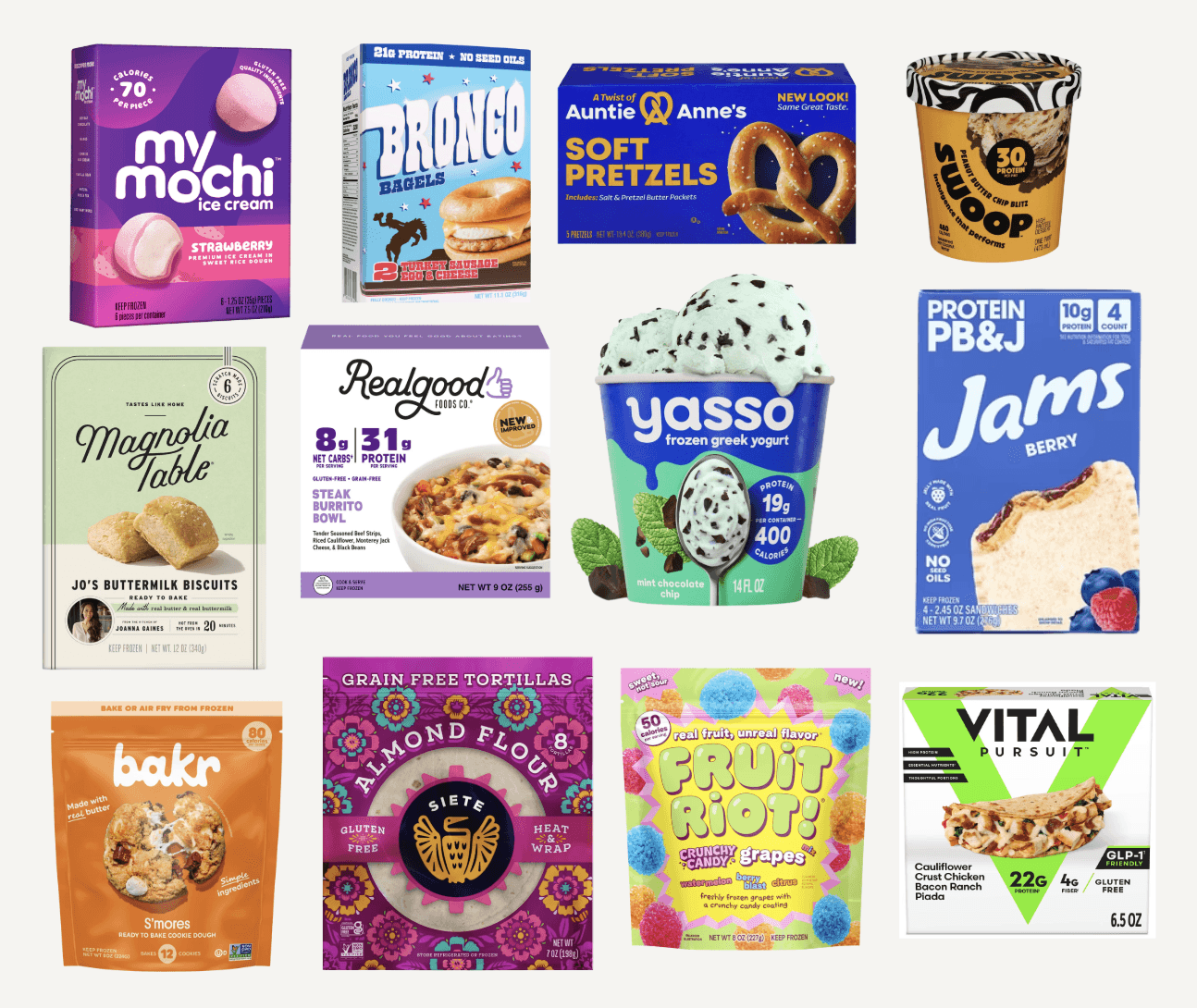
Over the last few weeks, five of the biggest retailers in America reported Q1 earnings. TJX. Ross. Burlington. Target. Walmart.
Every CPG founder I know read the same headlines. Consumer sentiment hit a new record low. Gas station traffic is down. Walmart's CFO pointed to specific consumer behavior as "an indication of stress." And then everyone moved on with their day.
That's the wrong read.
Each of those five earnings reports contains a specific message to CPG founders about how to build a brand right now. Read separately, they look like five news stories. Read together, they're five chapters of the same playbook. The retailers are telling you what they're buying, what they're rejecting, and what kind of brand wins over the next 18 months.
We broke down the last earnings cycle for off-price a few months ago. This time the cycle is bigger, because all five retailers reported within a few weeks of each other, and the signals stack.
Most founders are still pitching against the wrong competitor with the wrong margin math. Here's what the prints actually said.
TJX: The floor is growing faster than the supply of buy-ready brands.
TJX reported another quarter of dominance. Marmaxx comps up 6%. HomeGoods comps up 9%. Net income up 29% to $1.3 billion. They reaffirmed a long-term path to 1,700 additional global stores on top of the nearly 5,000 they already run.
Most founders read that and think "the off-price floor is getting bigger."
The actual message is more interesting. The off-price floor is getting bigger faster than the supply of brands that are ready to be on it.
A new TJX or Marshalls store needs $4-5 million in opening inventory plus continuous replenishment. Ross is adding 110 doors this year. Burlington another 115 plus a new 2 million-square-foot distribution center in Savannah. That's hundreds of new doors going live in 2026, every one of them needing brands that can prove velocity, hold a price ladder, and turn at off-price economics without breaking DTC pricing.
The bar isn't getting lower because the floor is growing. The bar is getting higher because retailers are deploying more capital into a model that depends entirely on turn rate. We unpacked the buyer-side pressure that creates in Why TJX Just Told 1,400 Buyers to Slow Down.
What this means for your brand: if you're sitting on inventory and you're not in active conversations with off-price buyers, you're behind. The brands that TJX picks up for Q3 reset windows started those conversations in April. The window for being part of the 2026 expansion class is open right now, and it closes as the buyer's calendar fills for the back half of the year.
I wrote more about why off-price doesn't dilute brand equity (and where founders get this wrong) in this piece on commonshelf.co.
Ross: The Q1 print everyone is misreading.
Ross posted a monster Q1. Sales up 21% to $6.0 billion. Comparable sales up 17%. EPS up 37% to $2.02, blowing past their own guidance. Customer count up by a double-digit percentage on a comp basis.
That last number is the one most founders skipped over.
Ross isn't winning because the consumer is trading down. Ross is winning because they're pulling in more customers at scale. Double-digit transaction growth at $6 billion in quarterly revenue is something other than a defensive trade. It's an offensive share gain.
What that means for the buyer's behavior: when a retailer is winning on traffic, the merchandising team gets more aggressive on opportunistic buys. The "we'll try one season" conversation gets easier. The volume of buyer-initiated brand discovery goes up. For an emerging CPG brand with a viral SKU or a clean Amazon velocity story, this is the easiest moment in five years to get a first meeting with Ross.
What this doesn't mean: that the bar is lower. Ross's merchandising discipline is famously brutal. More meetings does not equal more yeses. It means more first meetings, and the brands that win the second meeting are the ones who walked into the first one with proven offline and online velocity data. Not DTC revenue. Not Instagram followers. Sell-through math.
Two of our clients walked this exact path. Roofus and Fomin both used off-price as a credibility play, not a clearance one. Fomin built velocity in Bealls and TJ Maxx and used that as leverage to land traditional retail conversations after.
Burlington: The trend-chase machine just got faster, and the buyer's risk appetite went with it.
Burlington reported Q1 sales up 14% to $2.85 billion. Comparable store sales up 6%, more than double their own guidance of 2% to 4%. Adjusted EPS up 26% to $2.10. That's the 14th consecutive quarter of double-digit earnings growth. The company had expected operating margin to decline by 60 to 100 basis points this quarter. It expanded by 20. They beat their own margin guidance by a full point and raised full-year EPS guidance to a range of $11.45 to $11.80.
Read the headline numbers and Burlington looks like the third entry in a generic off-price strength story. Read the call transcript and a different story shows up.
CEO Michael O'Sullivan openly said Burlington is still behind its off-price peers on localization and supply chain automation. He also credited the Q1 upside to upgraded allocation and localization capabilities that let the team chase trends faster, which drove double-digit comps in warm weather categories. Translation: Burlington started buying like a trend retailer this quarter, and it worked.
That's a structural shift in buyer behavior. For most of the last decade, Burlington's reputation among CPG founders was the slower-moving off-price account. Tighter aesthetic, deeper price ladder, more cautious on emerging brands. That posture is changing. The company is closing the gap to TJX and Ross on speed of read, which means the buyer's appetite for the brand that's hot right now (not the brand that was hot 18 months ago) is moving up.
The Savannah distribution center makes this real, not theoretical. Two million square feet, highly automated, designed for off-price economics, roughly twice the size of Burlington's next-largest facility. When that node comes online, the speed at which Burlington can flow product through the Southeast goes up materially. Faster flow means buyers can commit to more opportunistic buys with shorter horizons. That's the brand entry door.
What this means for your brand: Burlington is opening 115 net new stores this year on a base of 1,242. They're chasing trends faster than they have in a decade. And management explicitly acknowledged they may have left comp growth on the table in Q1 by focusing on earnings, which is code for "we'll be more aggressive on opportunistic buys for the back half." If your brand has a TikTok-driven velocity story or a category-trending Amazon SKU and you've written off Burlington as the conservative one in the off-price set, your map is out of date.
Target: Mass is rebuilding around discovery, not assortment.
Target posted its first positive comp sales in five quarters at +5.6%, more than doubling analyst expectations. They also committed $2 billion in incremental 2026 investment across 30+ new stores, 130+ remodels, technology, supply chain, and store staffing, and elevated Cara Sylvester to Chief Merchandising Officer (effective February 2026) specifically to fix the assortment problem.
The headline is "Target's back." The actual message is buried in the language.
Target isn't trying to win on having more SKUs. They're trying to win on having the right SKUs in the right adjacency, designed to feel like discovery. The store remodels reorganize the floor around moments and missions rather than category trees. Beauty endcaps now sit next to wellness. Home wellness sits next to beauty. The whole layout is being engineered to create the next "Glossier moment" instead of the next "shelf set."
What this means for your brand: if your packaging and positioning don't read as discovery-worthy in a 4-second scan, you're not in the conversation. Brands that win the new Target are the ones that look like they belong on a wellness aisle at Whole Foods circa 2018: clean, premium-adjacent, and emotionally legible. Brands that look like discount-mass aren't going to make the cut, even at discount-mass price points. The buyer is hunting for brand equity, not just margin.
If you're pitching Target this year, the question your deck needs to answer isn't "what's my growth story." It's "what's my discovery moment, and why does it work in this adjacency."
Walmart: The supplier margin floor just moved.
This is the print everyone is misreading.
Walmart posted $177.8 billion in Q1 revenue. E-commerce up 26% globally. Advertising up 37%. Walmart's same-day delivery network now reaches 95% of U.S. households, with under-three-hour delivery available as an option. And the number almost no one is talking about: Roughly 50% of Walmart U.S. e-commerce fulfillment center volume now flows through automated facilities.
Walmart's own 2023 investor day projected unit cost averages could improve by approximately 20% as that automation buildout completes. They committed to roughly this threshold by end of fiscal 2026. They're there.
Here's what most founders miss. When the retailer's per-unit cost on e-commerce drops 20%, the gross margin pressure on suppliers eases just enough to make room for brands the buyer would have passed on 18 months ago. The brand that got rejected in 2024 might get a yes in 2026, not because the brand changed, but because the math the buyer is solving for changed underneath them.
The fuel-pump data tells you about the consumer. It's interesting. It's also already priced into every analyst report on the planet.
The automation data tells you about the buyer. It's actionable. And almost no one is updating their pitch around it.
What this means for your brand: if you've been pitching Walmart with the same deck and the same margin assumptions you used in 2024, you're walking into a different room with the wrong map. The buyer's job got 20% easier on cost and 20% harder on standing out, because the door is now open to more brands than it was. Both halves matter. Pretending only one of them is real is how good pitches die.
The pattern most founders are missing.
Read the five prints together and a thesis emerges. The retailers are quietly telling CPG founders five things:
The off-price floor is the most defensible channel in 2026. Private label hit $330 billion in 2025 and now owns 24% of U.S. CPG unit share. Private label is eating mass and grocery. It can't eat off-price, because the model depends on real brands at real discounts.
The retailers winning right now are winning on traffic, not on margin. That means buyer-initiated brand discovery is up. The cold pitch has a better chance of being heard in Q3 than it did in Q1.
Brand equity is back as a moat. Target is paying $2 billion to reorganize around it. The brands that win mass in the next 18 months are the ones whose packaging earns the floor placement, not the ones whose price wins the slot.
The buyer's math changed. Walmart automation rewrote it. Target remodels rewrote it. Off-price expansion rewrote it. If you're pitching with a 2024 deck against 2026 economics, you're losing meetings that should have been wins.
The off-price buyer is moving faster than they were two years ago. Burlington's localization and allocation upgrades, Ross's traffic-driven aggression, and TJX's volume-driven capacity needs all point the same direction. The window between "brand is trending" and "brand gets a look" is collapsing. Velocity proof from the last 90 days now matters more than the total brand story.
The shift.
Five years ago, the playbook for an emerging CPG brand was: get on Shopify, scale ad spend, hit $5 million in DTC, then pitch retail. The retail conversation was the reward at the end of the brand-building exercise.
That playbook is over.
In 2026, retail isn't the reward. Retail is the brand-building exercise. Off-price velocity proves your demand without your ad spend. Mass retail builds your equity in a way no Meta campaign ever will. The right channel sequence at the right time will do more for your valuation than any growth round.
The founders who win the next 18 months are the ones reading the earnings reports as a playbook, not as news. The retailers just told you what they're buying. The question is whether you're listening.
Off-Price Readiness Sprint
Common Shelf runs a 2-week Off-Price Readiness Sprint to help emerging brands figure out whether they are ready to walk into that room and what to fix before they do. Week 1 covers product fit, margin architecture, and channel audit. Week 2 covers retailer roadmap, pricing logic, and pitch readiness. We are taking applications for June and July now.
If you are sitting on inventory and want a real read on the off-price opportunity, book a discovery call or DM me on LinkedIn directly. Better to know now than to pitch into a closing window.

Latest in Off-Price